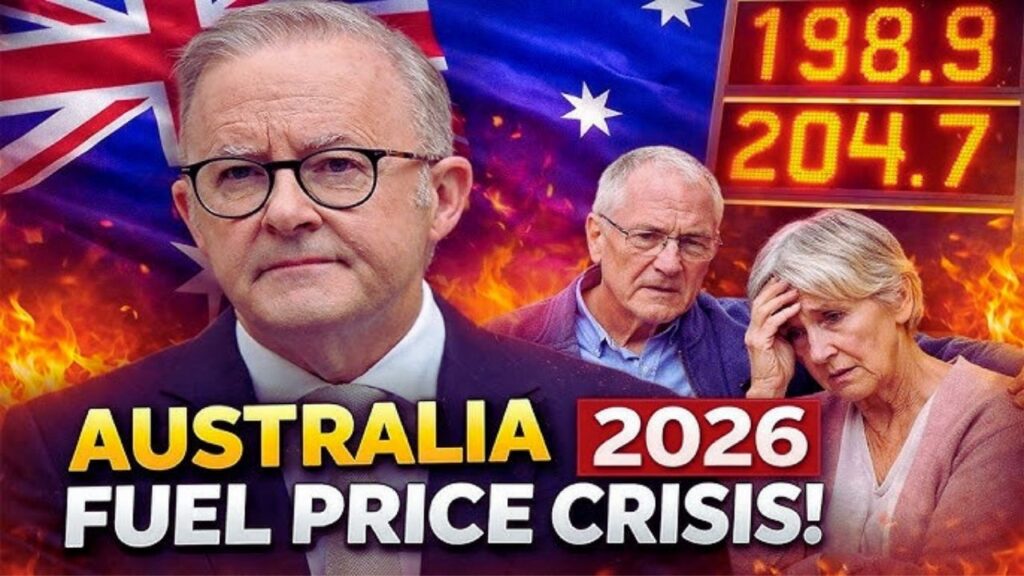
Petrol prices across Australia have surged sharply in early 2026, leaving many drivers shocked at the bowser. Global tensions in the Middle East, particularly disruptions linked to the Iran conflict, have pushed international oil and refined fuel costs higher. National averages for regular unleaded petrol climbed above $2.30 per litre in late March, with diesel rising even faster in many areas. The good news is that the federal government stepped in with a temporary fuel excise cut starting 1 April 2026, which should deliver noticeable relief at the pump over the coming months.
What Is Driving the 2026 Fuel Price Spike
Fuel prices in Australia depend heavily on global crude oil movements, import costs, and the Australian dollar. In February and March 2026, wholesale terminal gate prices jumped significantly as international benchmarks reacted to supply concerns. Retail prices followed, with some capital cities seeing increases of 40 to 60 cents per litre in a matter of weeks.
Diesel has been hit particularly hard because it powers freight, agriculture, and construction. This flows through to higher costs for goods and services. While supply stocks remain adequate overall, localised shortages in regional areas added pressure in some spots.
The Australian Competition and Consumer Commission (ACCC) has been monitoring the market closely and noted that retail prices sometimes rose ahead of or faster than wholesale costs in March.
Current Petrol and Diesel Prices in 2026
As of late March 2026, national average retail prices for regular unleaded petrol sat around $2.30 to $2.38 per litre, depending on the exact week and location. Diesel averages pushed toward or past $3.00 per litre in several major cities.
Prices vary daily and by suburb, with some stations charging noticeably more than others even in the same city. Capital city averages tended to converge during the peak of the rise, reducing the usual gaps between locations.
From 1 April 2026, the halving of the fuel excise duty should reduce prices by about 26.3 cents per litre at the pump, assuming retailers pass on the full saving. This temporary measure runs until 30 June 2026 and applies to both petrol and diesel.
How the Government Fuel Excise Cut Works
The federal government announced on 30 March 2026 that it would halve the fuel excise from 52.6 cents to 26.3 cents per litre for three months. This direct tax relief aims to ease cost-of-living pressures on households and businesses.
The cut took effect from 1 April 2026. It may take a few days for the lower wholesale costs to flow through to retail prices as stations sell off existing stock. The ACCC will watch closely to ensure the savings reach motorists.
Some states, such as Victoria and Tasmania, have also offered free public transport for limited periods to encourage people to drive less during the high-price period.
Why Prices Differ Across States and Regions
Fuel prices are not uniform because of differences in transport costs, local competition, and state-based monitoring tools. Perth and regional Western Australia often show different cycles from eastern states. Darwin and Hobart sometimes record higher averages due to freight distances.
Apps and websites like FuelCheck in NSW, FuelWatch in WA, and similar tools in other states let drivers compare real-time prices at nearby stations. During the March spike, these tools helped many find stations charging 10 to 30 cents less per litre than the highest ones.
Practical Ways to Save Money on Petrol Right Now
Drivers do not have to accept high prices without fighting back. Small changes in habits and smart shopping can add up to significant weekly savings.
- Use fuel comparison apps and websites to find the cheapest stations near you before filling up.
- Fill your tank during the cheaper days in the local price cycle, often mid-week.
- Choose E10 fuel where your car is compatible, as it is usually the lowest-priced option.
- Drive smoothly, avoid rapid acceleration, and keep speeds steady on highways to improve efficiency.
Removing unnecessary weight from your car, such as roof racks when not needed, and keeping tyres properly inflated can also cut fuel use by several percent. Turning off the air conditioning on shorter trips and using windows instead at lower speeds helps too.
- Plan trips to combine errands and reduce total kilometres driven.
- Consider carpooling, public transport, or working from home on busy days.
- Maintain your vehicle with regular servicing to keep the engine running efficiently.
- Sign up for supermarket or petrol station loyalty programs that offer cents-per-litre discounts.
Even modest adjustments, such as driving 10 km/h slower on highways or using cruise control, can improve fuel economy noticeably.
What to Expect for Fuel Prices in Coming Months
The excise cut should bring some immediate relief from April onward, though global oil markets remain volatile. If international tensions ease, prices could moderate further by mid-year. However, many analysts expect elevated costs to linger longer than the three-month tax relief period.
The ACCC continues weekly monitoring and has increased powers to address misleading pricing or anti-competitive behaviour. New legislation has also doubled penalties for certain misconduct in the fuel sector.
For heavy vehicle operators, the government has temporarily removed the heavy road user charge as part of the support package.
Making Fuel Savings Part of Your Routine
High petrol prices in 2026 highlight how connected everyday driving is to global events and domestic policy. While no one can control oil markets, using comparison tools, adjusting driving habits, and taking advantage of the excise reduction can help protect your budget.
Many Australians are already shifting some trips to public transport or combining errands more thoughtfully. Over time, these habits not only save money but can also reduce overall fuel consumption across the country.
Keep checking official sources and state fuel apps for the latest prices and any further government announcements. With the excise cut now active, the next few weeks will show how much relief actually reaches the bowser.