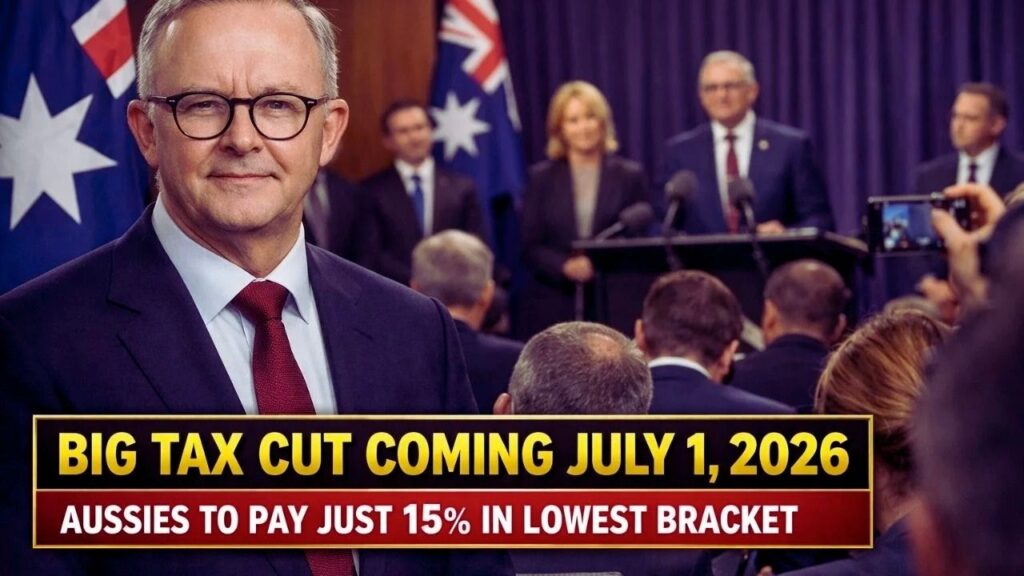
The Australian tax landscape is set for another significant shift as the 2026–2027 financial year approaches. Building on the previous rounds of tax relief, the federal government has legislated further reductions to personal income tax rates specifically designed to combat bracket creep and provide extra breathing room for households.
Starting July 1, 2026, every Australian taxpayer will benefit from a lowered tax rate in the first marginal bracket. These changes are not just a one-off adjustment but are part of a multi-year strategy to ensure that as wages grow, workers keep a larger portion of their earnings.
The New 2026–2027 Tax Brackets Explained
The primary change for the upcoming 2026–2027 financial year is the reduction of the lowest tax rate above the tax-free threshold. Currently set at 16%, this rate will officially drop to 15% for all income earned between $18,201 and $45,000. This follows the broader “Stage 3” reforms that previously flattened the middle-income brackets.
By lowering this entry-level rate, the government is providing a targeted “top-up” to the tax relief already in circulation. For those in the middle and higher income brackets, the benefits remain locked in, ensuring that the vast majority of Australians continue to pay a lower average tax rate than they did in previous years.
- The 16% tax rate will be reduced to 15% starting July 1, 2026.
- The 30% tax rate remains in place for income between $45,001 and $135,000.
- The top marginal rate of 45% continues to apply only to income exceeding $190,000.
Calculating Your Actual Savings
For most workers, the 2026–2027 tax cut will result in an additional saving of up to $268 per year compared to the 2025 settings. While this might seem modest on its own, it is important to view it as a cumulative benefit. When combined with the first round of tax cuts delivered in 2024, the total annual savings for an average earner are substantial.
A worker on an average salary of approximately $79,000 will see their total tax relief grow to nearly $2,000 per year by the time these 2026 changes take full effect. This extra cash is often reflected in slightly higher take-home pay in each fortnightly or monthly paycheck.
- Taxpayers earning over $45,000 will receive the maximum additional saving of $268 for the year.
- Those earning between $18,201 and $45,000 will see a sliding scale of savings depending on their exact income.
- Families with two high-earners could see their collective household tax bill drop by over $500 compared to last year.
- Average annual savings across all taxpayers are expected to reach roughly $2,229 in the 2026–2027 period.
Impact on the Medicare Levy and Thresholds
The 2026–2027 updates also include adjustments to the Medicare levy low-income thresholds. This ensures that people on lower incomes do not start paying the 2% levy too early. The government has indexed these thresholds to reflect inflation, effectively exempting more low-income earners, seniors, and pensioners from the levy entirely.
If your income falls below the new thresholds, you may be eligible for a reduction or a total exemption from the Medicare levy. This is an often-overlooked part of the tax system that can provide hundreds of dollars in extra savings for those who qualify, particularly part-time workers and retirees.
Looking Ahead to 2027 and Beyond
The tax relief does not stop in 2026. The government has already legislated a further reduction for the following year, where the 15% rate is scheduled to drop again to 14% on July 1, 2027. This long-term plan is intended to keep the tax-to-GDP ratio stable while providing a permanent boost to household disposable income.
As these rates decrease, the “reward for work” increases, encouraging more Australians to take on extra shifts or seek promotions without fearing that a large portion of their raise will be lost to higher tax brackets. The ultimate goal is to keep the average tax rate for the typical worker from exceeding 2023 levels for at least the next decade.
The 2026–2027 tax cuts offer a clear, legislated path toward lower income taxes for every Australian. By focusing on the bottom rate, the government has ensured that the benefits reach everyone from part-time students to high-level professionals. While $268 in extra savings may feel like a small adjustment, the cumulative impact of these reforms means that thousands of dollars are being returned to the pockets of hardworking Australians, helping to offset the ongoing pressures of modern living costs.
Frequently Asked Questions
Do I need to apply for these tax cuts?
No. The Australian Taxation Office (ATO) automatically updates the tax tables that employers use. You will see the change reflected in your take-home pay starting from your first pay period after July 1, 2026.
What if I earn less than $18,200?
The tax-free threshold remains at $18,200. If you earn less than this amount in a financial year, you generally do not pay any income tax, so the new rate changes will not affect your tax liability.
Will these tax cuts increase inflation?
The government and the Reserve Bank of Australia (RBA) have indicated that these cuts are designed to be modest and phased in over several years to ensure they do not put undue upward pressure on inflation.
How do these cuts affect my HECS/HELP debt repayments?
Tax cuts affect your “take-home” pay, but your compulsory study loan repayments are based on your total “repayment income.” While your tax rate is lower, your loan repayment obligations will still be calculated based on the current 2026–2027 repayment thresholds.
Are there changes for small businesses too?
The 2026–2027 updates primarily focus on personal income tax. However, base rate entities (small businesses with a turnover under $50 million) generally continue to benefit from the 25% corporate tax rate that was established in previous years.