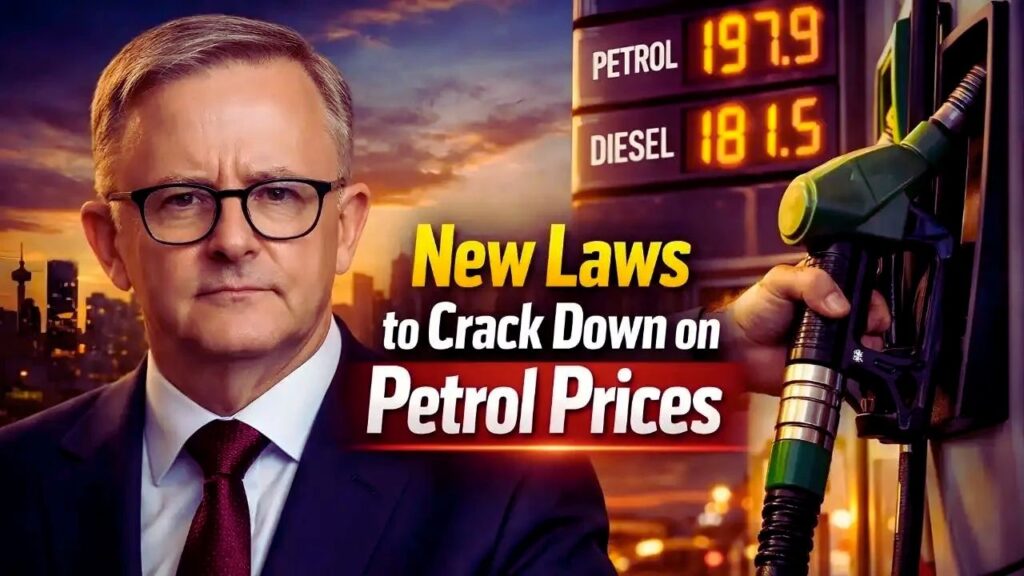
Australian motorists are waking up to a major shift in how fuel is regulated as the federal government officially launches a massive crackdown on petrol price misconduct. Following months of extreme volatility at the bowser, new legislation taking effect this week introduces some of the toughest penalties and transparency rules in the nation’s history.
These 2026 reforms aim to protect households from “price gouging” and anticompetitive behavior that has plagued the market during recent global supply shocks. While the government cannot control the international price of crude oil, these new laws ensure that local retailers cannot use global uncertainty as a cover for unfair profit-taking.
Massive New Penalties for Market Misconduct
The centerpiece of the 2026 crackdown is the Treasury Laws Amendment (Doubling Penalties for ACCC Enforcement) Bill. This legislation effectively doubles the maximum fines for companies found guilty of anti-competitive conduct or misleading consumers about fuel costs. For the first time, a single offense could cost a major fuel corporation up to $100 million.
By significantly increasing the financial risk for bad behavior, the government is sending a clear message to the industry. The Australian Competition and Consumer Commission (ACCC) has been granted a broader mandate to prioritize investigations into price-fixing and cartel-like behavior between competing service stations.
- Maximum penalties for false or misleading pricing have jumped from $50 million to a staggering $100 million per offense.
- The ACCC now has the power to issue on-the-spot fines for smaller transparency violations without going to court.
- Corporations can also be fined up to 30% of their adjusted turnover if they are found to be coordinating price spikes.
Emergency Fuel Tax Cuts and Supply Measures
In addition to tougher penalties, the Prime Minister has announced an immediate emergency reduction in the fuel excise tax. Starting tomorrow, April 1, 2026, the fuel excise will be halved for a period of three months to provide direct relief to struggling families. This move is expected to shave 26.3 cents per liter off the total price at the pump.
To ensure this tax cut is actually passed on to drivers rather than being swallowed by retailers, the ACCC will be conducting intensive, real-time monitoring of price movements across all states and territories.
- The fuel excise cut from 52.6 cents to 26.3 cents will remain in place until the end of June 2026.
- Fuel standards have been temporarily relaxed to allow for a broader range of international imports to reach Australian shores.
- The government has released 20% of the national strategic fuel reserve to prevent localized shortages and panic buying.
- Heavy vehicle road user charges have also been frozen to keep transport and grocery costs stable.
Enhanced Transparency and Mandatory Reporting
New transparency laws are also rolling out, beginning with a strict daily price-cap model in several states. Under these rules, fuel retailers are required to report their maximum daily price to a central government database. Once a price is set for the day, retailers are legally prohibited from increasing it, though they are still encouraged to lower it to remain competitive.
This “no-increase” rule aims to end the frustration of price cycles where costs can jump 40 cents in a single afternoon. Drivers can now use official government apps to lock in the best price, knowing it won’t spike before they arrive at the station.
Strengthening Regional Fuel Security
Regional Australia is a major focus of the 2026 reforms. Historically, motorists in rural areas have faced significantly higher prices and less competition than those in metropolitan centers. The new laws authorize major fuel suppliers to coordinate their logistics and supply chains more closely to ensure that remote regions do not run dry during supply bottlenecks.
This coordination is strictly monitored by the ACCC to ensure it is used only for securing supply and not for price manipulation. By allowing competitors to share transport resources during emergencies, the government hopes to stabilize regional fuel availability and prevent the extreme price hikes often seen in the bush.
The 2026 fuel price crackdown marks the most aggressive intervention in the Australian energy market in decades. By combining $100 million fines with an immediate 26-cent tax cut, the government is attempting to tackle both the symptoms and the causes of high petrol prices. While global tensions will continue to influence the base cost of fuel, these new domestic laws provide a much-needed safety net, ensuring that every cent Australians pay at the bowser is fair, transparent, and justified by real market conditions.
Frequently Asked Questions
Will petrol prices drop exactly by 26 cents tomorrow?
While the tax cut takes effect immediately, it may take a few days for existing fuel stocks—which were purchased at the higher tax rate—to be sold through. Most major retailers are expected to lower prices within 24 to 48 hours to remain competitive.
How can I report a service station for unfair pricing?
If you suspect a retailer is engaging in misleading conduct or hasn’t passed on the tax cut, you can report them directly to the ACCC through their dedicated fuel monitoring portal or your state’s consumer affairs agency.
Does the daily price cap apply to all of Australia?
Currently, the mandatory daily price-reporting and “no-increase” rules are being led by state-based initiatives in Victoria and New South Wales, with other states expected to adopt similar frameworks by mid-2026.
Are electric vehicle (EV) charging prices included in these laws?
The current 2026 crackdown specifically targets liquid fuels like petrol and diesel. However, the government has signaled that a separate transparency framework for public EV charging stations is currently in development.
What happens after the three-month tax cut ends?
The fuel excise is scheduled to return to its full rate on July 1, 2026. The government will review the global supply situation in June to determine if further extensions or alternative support measures are required.